
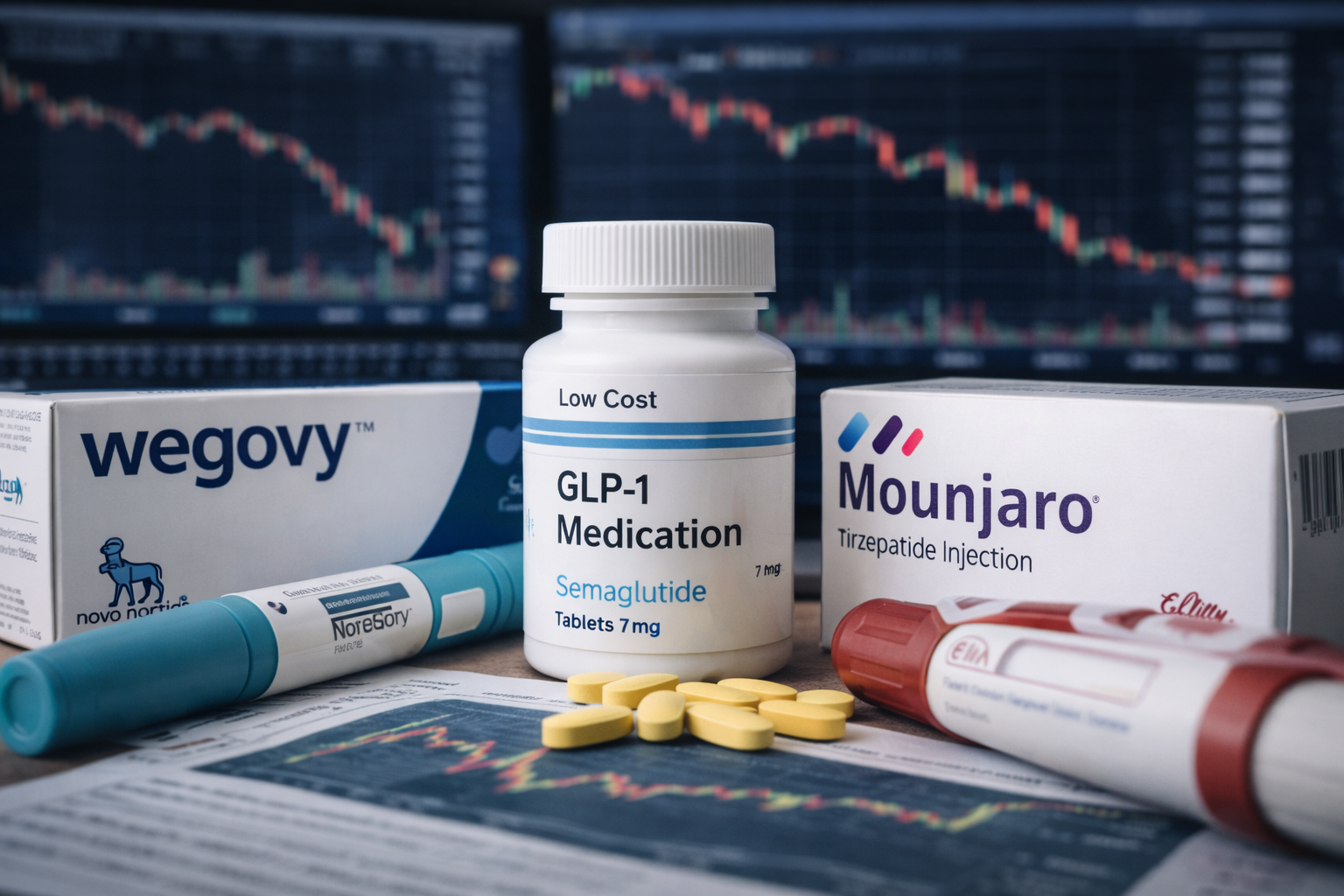
Novo Nordisk and Eli Lilly are facing an uncomfortable new price point this week after a $49 weight-loss pill jolted the GLP-1 market.
By launching a low-cost, compounded oral version of semaglutide, Hims & Hers has undercut branded GLP-1 drugs by a wide margin, forcing investors to reassess the durability of Big Pharma’s pricing power.
The market reaction was swift, with shares of Novo Nordisk falling sharply and Eli Lilly also coming under pressure as a long-protected market suddenly looked more fragile.
How the $49 pill undercuts the GLP-1 market
At the centre of the disruption is pricing.
Hims & Hers is offering a compounded oral semaglutide pill for $49 for the first month, followed by $99 per month under a subscription model, sold directly to consumers on a cash-pay basis.
That compares with brand-name oral Wegovy pricing examples, which include approximately $149 to start for certain doses and up to $299 for higher doses or ongoing fills, depending on the dosage and discounts.
The term “compounded” is key.
Unlike branded drugs approved by regulators after years of clinical trials, compounded medicines are prepared by pharmacies to meet patient demand when approved products are unavailable or unaffordable.
They are legal in the US under specific conditions, but they do not go through the same approval process as branded drugs.
For consumers frustrated by insurance hurdles, supply shortages, and high out-of-pocket costs, the appeal is clear.
A lower upfront price reduces the barrier to access.
That is the bet Hims is making, as convenience and affordability will matter more to many patients than brand recognition alone.
For Big Pharma, the concern is not just one product.
If patients become comfortable with compounded alternatives, the premium pricing model that has defined the GLP-1 market begins to look more vulnerable.
Read More: How weight-loss drugs are destroying big snacking, erasing billions in sales
Markets, regulation and stakes for Big Pharma
Investors wasted little time reacting. Novo Nordisk shares fell about 6% on the day, reflecting fears that cheaper alternatives could pressure future margins.
Lilly, which also has significant exposure to the weight-loss drug market, saw its stock come under pressure as well.
Company executives have pushed back.
Novo’s leadership has publicly dismissed compounded alternatives as inferior and unlikely to threaten approved products.
The company argued that safety, consistency, and regulatory oversight will keep patients and doctors loyal to branded drugs.
That defence may soon be tested. Regulators are already scrutinising the expanding use of compounded GLP-1 medications, and a legal and regulatory battle appears likely.
Authorities face a delicate balance between patient safety and access at a time when demand for weight-loss drugs continues to exceed supply.
For now, Hims is operating within existing rules, but the environment could shift quickly. Any tightening of enforcement would raise costs and slow expansion.
Inaction, however, could invite more low-cost entrants and accelerate price competition across the industry.
The post Why a $49 weight-loss pill is rattling Novo Nordisk and Eli Lilly appeared first on Invezz